Who Would I Be?
I have been thinking about this story for a long time. The strange thing is, it was never really about a job. For years, I thought it was. If you had asked me twenty years ago why leaving Horrocks Engineers affected me so deeply, I would have said it was because I loved working there. And I did. I loved the people. I loved the work. I loved feeling part of something that mattered. I was not polishing my résumé or wondering where my career might take me next, because I honestly believed I had already arrived. In my mind, Horrocks was where I would spend the rest of my career. I imagined retiring there one day, shaking hands, telling stories, and looking back with gratitude on a life spent doing work I loved.
Life had other plans. Companies change. Leadership changes. Priorities shift. Sometimes the future you quietly build in your mind disappears before you have time to prepare for it. That is what happened to me. I will not spend much time on why I left, because that is not really the story. What happened inside me afterward matters far more than the circumstances. At the time, though, I thought I understood the hurt. I believed I was simply grieving the loss of a job I loved. It seemed like the obvious explanation, and for years I never questioned it.
But as time passed, that explanation no longer felt complete. Every so often, I would think back to that season and wonder why it still occupied so much space in my heart. It was not bitterness. It was not regret. I was not wishing I could go back. I simply could not understand why something supposedly behind me still had such a hold on me. If I was only grieving the loss of a job, why had those feelings not faded long before they did? That question stayed with me for years, even when I did not realize I was asking it.
The answer did not come all at once. It came in ordinary moments: long drives with nothing to distract me from my thoughts, conversations with Kathy Lee about where life had taken us, and quiet prayers when I found myself asking Heavenly Father why this chapter still mattered so much. Somewhere in that season, I realized I had been asking the wrong question. I kept asking why I missed Horrocks so much, when the better question was why leaving Horrocks had felt like losing part of myself. That was when I understood I was not grieving a career nearly as much as I was grieving an identity I had unknowingly built.
If someone had told me that while I still worked there, I probably would have disagreed. I never consciously decided my title would become part of who I was. It happened so gradually I did not notice. Every promotion felt rewarding. Every new responsibility felt meaningful. Every compliment from someone I respected reminded me I was doing worthwhile work. None of that was wrong. It is part of a healthy career. But somewhere along the way, I quietly began answering the question “Who are you?” with what I did instead of who I was. I do not think that is unusual. I think most of us do it without realizing it.
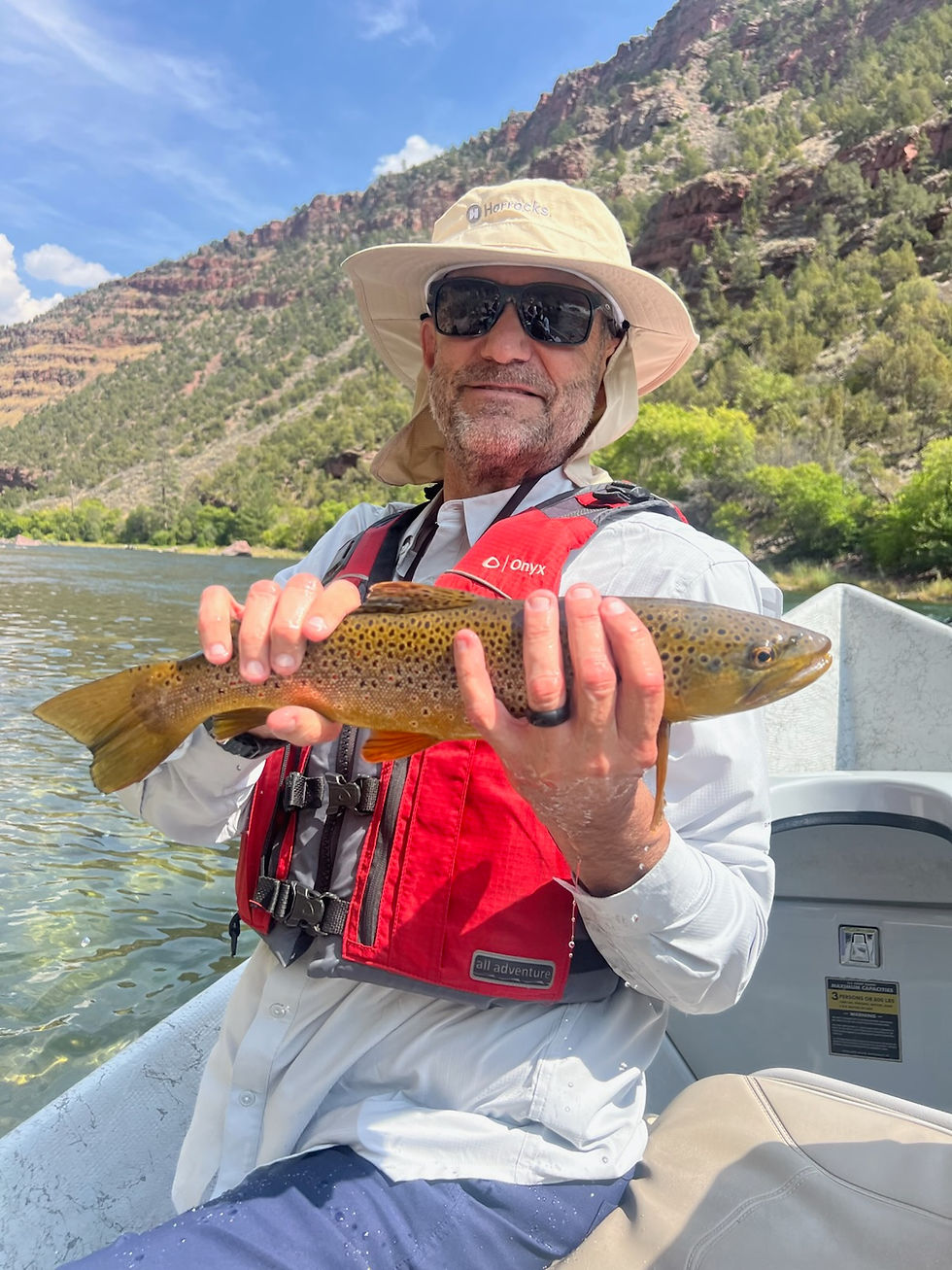
I laughed when I noticed the picture later. I had not even realized I was still wearing my old Horrocks hat. There I was, standing in a river, holding a beautiful brown trout, making a memory I would never forget—and still carrying a piece of the life I once thought would define me forever.
Maybe that is how healing works. We do not always notice we are carrying an old identity until one day we see it in a photograph. Then we realize something even more important: the hat may still be there, but it no longer tells us who we are.
Once I saw it, I could not unsee it. I had been asking my career to answer a question it was never meant to answer. A career can give you purpose, provide for your family, create opportunities to make a difference, and become something you truly love. But it cannot tell you who you are. No title can carry that weight. So when I began looking for what came next, I made myself a promise. I do not remember writing it down, but I remember making it: wherever I landed, I would love the work, care deeply about the people, and give the mission everything I had. But I would never again let my identity attach itself to a title. I did not want to spend another season confusing my calling with who I was.
That promise has shaped every job since. Today I have the privilege of serving as Vice President of Human Resources for Cascades Healthcare, and I genuinely love what I do. I believe in the mission. I care deeply about the people I work with, and I still find purpose in showing up every day. The difference is that the title no longer tells me who I am. If it disappeared tomorrow, I would grieve the loss. I would miss the people and the work. But I would not lose myself. Before I am a vice president, I am Kathy Lee’s husband. Before I am an executive, I am a father and grandfather. Before I am an HR leader, I am a disciple of Jesus Christ trying to become a little more like Him. I am also a brother, a friend, and a writer who loves telling stories. None of that disappears because a title does.
Ironically, separating my identity from my career has made me a better leader. When your identity depends on your position, criticism feels personal because it seems to question your worth. Success becomes something you have to protect instead of something you can simply be grateful for. Setbacks feel heavier than they should because you have quietly attached your value to the outcome. But when your identity is rooted somewhere deeper, leadership changes. You can admit you are wrong without feeling diminished. You can celebrate someone else’s success without measuring it against your own. You can make hard calls because they are right, not because they are safe. And at the end of the day, you can go home and be fully present with the people who matter most.
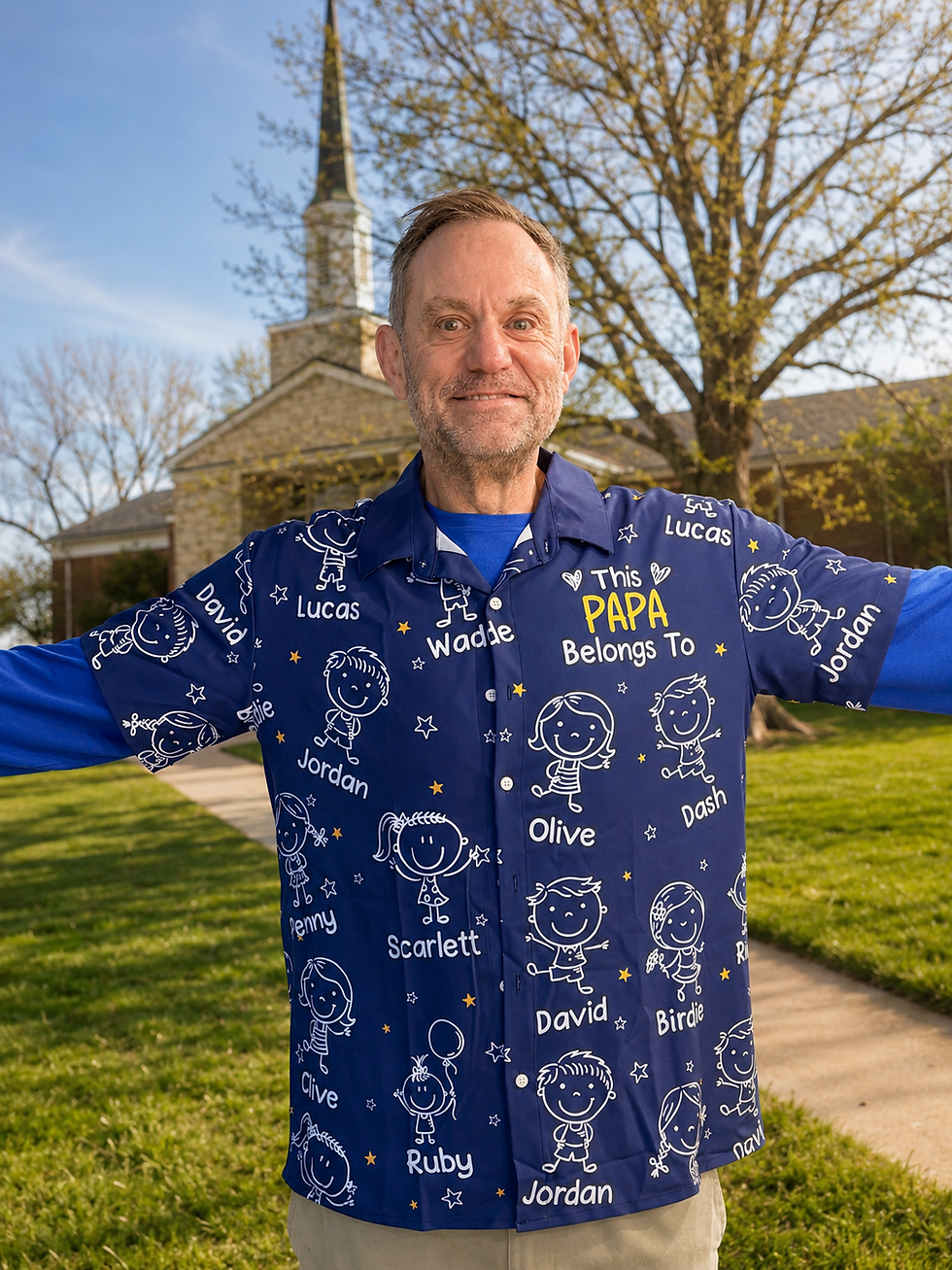
Somewhere along the way, my business card stopped answering the question “Who are you?” My grandchildren started answering it instead. I would much rather be known as Kathy Lee’s husband, Dad, and Papa than by any title I have ever held.
Over the years, I have wondered how many of us quietly build our identity around something that will not always stay the same. Maybe for you, it is not a career. Maybe it is being a parent, your marriage, your health, your reputation, or being the person everyone turns to. None of those things are bad. In fact, many of them are among life’s greatest gifts. But children grow up. Careers end. Health changes. Seasons come and go. Sooner or later, life asks each of us the same question.
If everything you had quietly allowed to define you disappeared tomorrow...
Who would you be?
That question does not frighten me anymore. Looking back, I thought I was searching for another job. I think God was teaching me to stop searching for my identity in one.


Comments